




Introduction: Sintra, the Romantic Cradle and Its Three Must-Sees
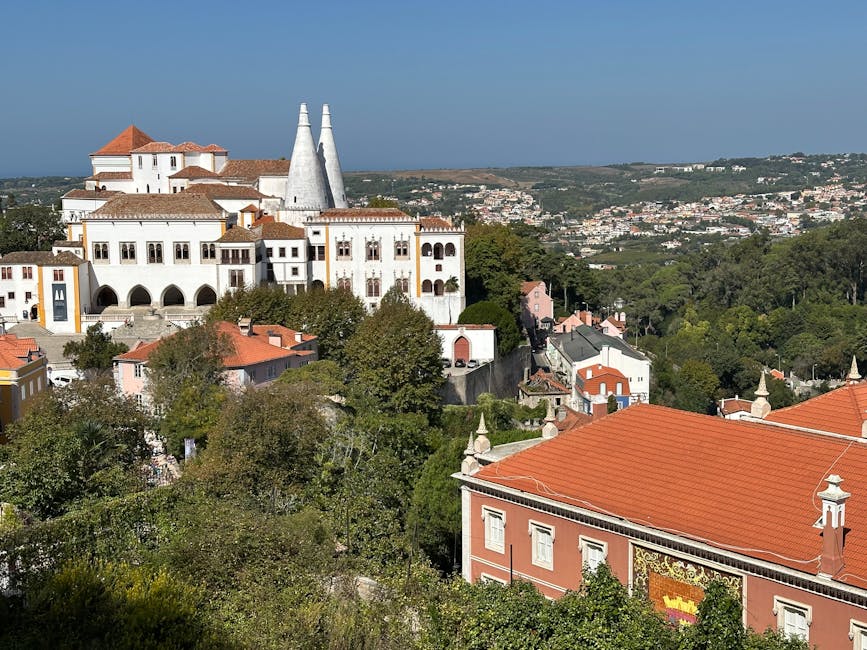
Perched on the green hills of the Serra de Sintra, about thirty kilometres west of Lisbon, the town of Sintra is one of Portugal’s great gems. A UNESCO World Heritage site since 1995, Sintra is famed for eccentric palaces, lush gardens and medieval remains. Among the many monuments, three stand out as essential visits for both the stories they tell and the mysteries they hide: the Palácio Nacional da Pena (Pena Palace), the Quinta da Regaleira and the Castelo dos Mouros (Moorish Castle). This article is a detailed guide for the curious traveller who wants to understand not only “what to see” but also “why” these places fascinate, how to visit efficiently, and which little secrets give each site its special atmosphere.
In the sections that follow we’ll explore history, architecture, symbolic elements, and practical tips (exact addresses, opening times, ticket prices in euros) to help plan an optimal visit. Each site deserves careful attention: Palácio da Pena, with its bright colours and romantic architectural mix, is the most extravagant expression of 19th-century Romantic taste; Quinta da Regaleira, a small estate in the heart of Sintra, conceals underground passages, initiation rituals and a labyrinthine garden inspired by alchemy and Freemasonry; Castelo dos Mouros offers both medieval ruins and breathtaking views over the Atlantic coast and Pena Park.
Beyond practical information, we provide keys for interpretation: how to read the symbols in Regaleira, why Romanticism is so strongly embodied at Pena, and which historical traces the Moorish Castle preserves from its medieval occupation. You’ll also find local tips—best times to avoid crowds, how to get around the winding roads, tricks for buying tickets (online, combined passes, or with audio guides), plus suggestions to extend your experience: nearby cafés, trails to prioritise and lesser-known but remarkable spots.
Before you start: wear walking shoes, bring a windbreaker (even in summer, fog can roll in), and allow plenty of time. These three highlights are worth earning. They unfold slowly—between panoramas, mysterious corners and carved details that only reveal their secrets to those who take the time to look.
1. Palácio Nacional da Pena: The Fantasy of Portuguese Romanticism
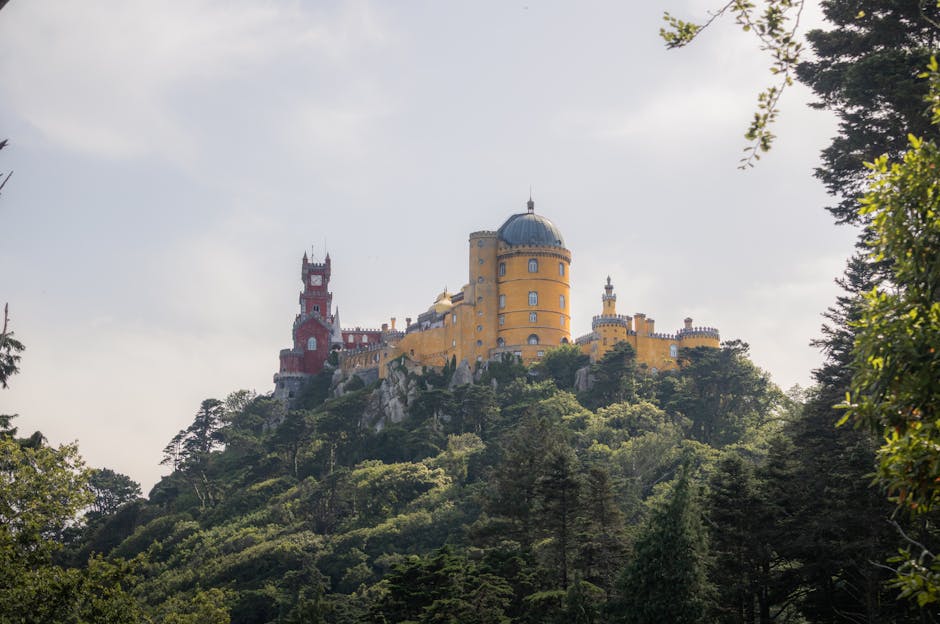
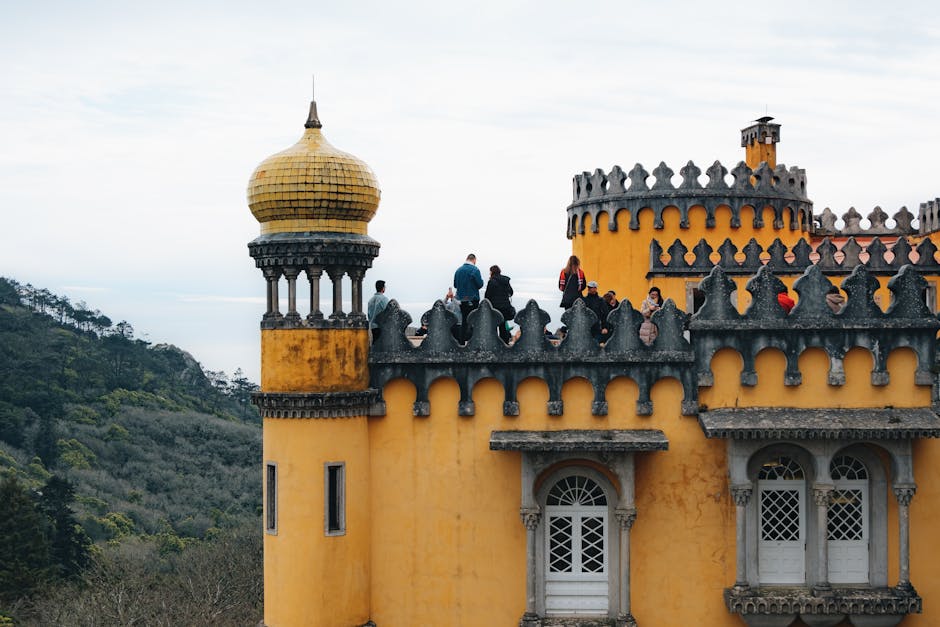
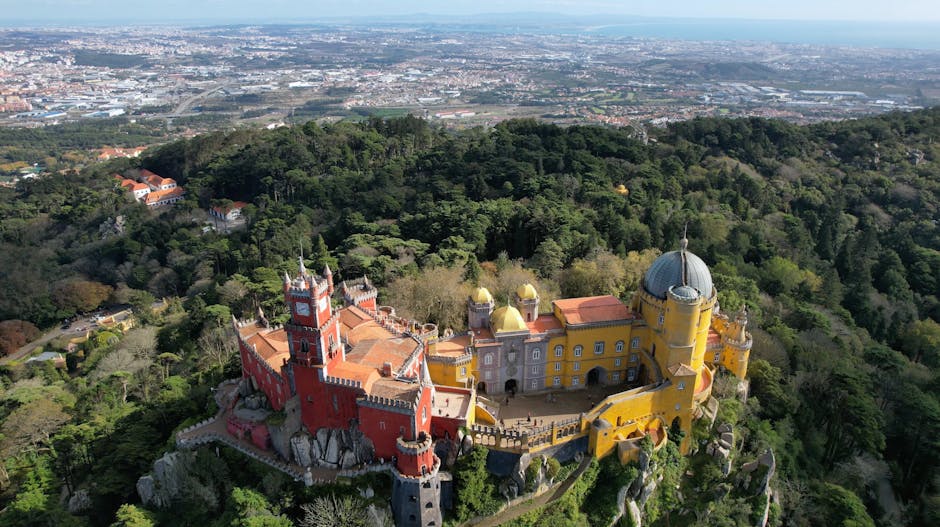
The Palácio Nacional da Pena (Pena Palace) is one of Portugal’s most photographed icons. Perched atop a hill at 450 metres elevation, it dominates the Serra de Sintra and asserts a colourful silhouette visible across the region. It’s a romantic extravagance commissioned in the 19th century by King Ferdinand II, who transformed the ruins of a 16th-century convent into an eccentric royal residence blending neo-Manueline, Gothic, Renaissance and Moorish styles.
Address: Palácio Nacional da Pena, Estrada da Pena, 2710-609 Sintra, Portugal.
Opening hours: Generally the palace and park open at 09:30 and close between 18:00 and 19:30 depending on the season (times vary: check the official site before you go). The park sometimes opens earlier than the palace.
Price: Indicative rates (subject to change): combined Palace + Park ticket adult ~€16–€20; park-only access ~€7–€10; reduced rates for youth and seniors. Child tickets (6–17 years) and free entry for under-6s under certain conditions. Online booking strongly recommended—skip-the-line tickets available.
Visiting Pena is like stepping into a living painting: ochre facades, red turrets and yellow domes, carved arches and balustrades, doorways decorated with symbolic motifs. Inside you’ll find richly decorated salons, wood-paneled rooms, tapestries and historic furnishings that evoke 19th-century court life. Architecturally, the palace is emblematic of the Romantic movement, which reacted to industrial modernity by seeking escape, fantasy and nostalgia for idealised past eras.
Practical tips:
- Getting there: You can reach Pena from Sintra’s historic centre by tourist bus (line 434 Sintra – Pena), taxi, or on foot with a hike of about 1h30 from the lower town. Parking is limited; prefer buses or taxis to avoid queues for parking.
- Best time to visit: Early morning at opening to enjoy the views with fewer people. Late afternoon brings oblique light that enhances the colours for photos.
- Audio guide: Available in multiple languages; useful to understand the variety of stylistic influences.
- The park: Don’t skip Pena Park (often included in combined tickets): winding paths, exotic trees and surprising viewpoints extend the palace experience.
- Avoid: Busy weekends and July/August if possible; weekdays are preferable.
Secret and anecdote: Ferdinand II conceived the palace as a “house of imagination”; he died there in 1885. Some rooms retain personal details—objects, paintings and décor—that make the visit feel intimate. A lesser-known secret: the colourful terracotta roofs reflect a Romantic polychrome trend imported from England and Germany, revealing an unexpected cosmopolitan streak in Portuguese architecture.
2. Quinta da Regaleira: Crypts, Initiation Well and Occult Symbolism
The Quinta da Regaleira is often called the “palace of mysteries.” Less imposing on the surface than Pena, it has such symbolic density and atmosphere that it’s one of Sintra’s most fascinating spots. Built between 1904 and 1910 for António Augusto Carvalho Monteiro, an avid art collector, and designed by Italian architect Luigi Manini, the estate blends Gothic and mannerist influences with esoteric symbolism (Freemasonry, alchemy, Rosicrucian traits).
Address: Quinta da Regaleira, Rua Barbosa do Bocage 5, 2710-567 Sintra, Portugal.
Opening hours: Typically open from 10:00 to 18:30 (closing times vary; consult the official website for winter/summer hours and public holidays).
Price: Adult ticket around €10–€12; discounts for students/seniors; very young children may be free under certain conditions. Combined tickets with other Sintra monuments are sometimes available.
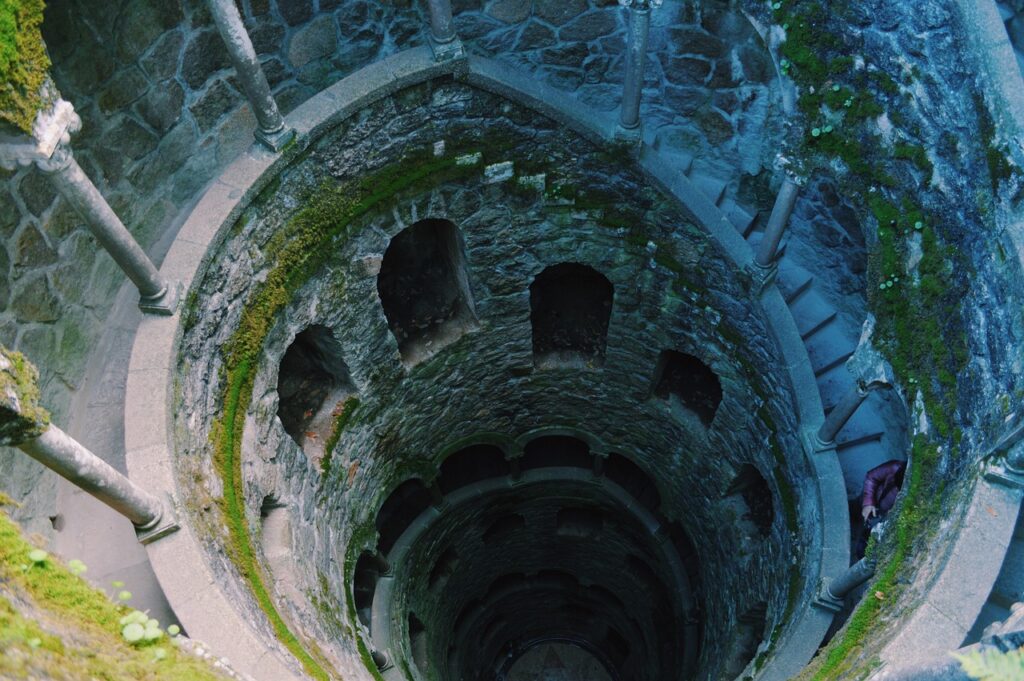
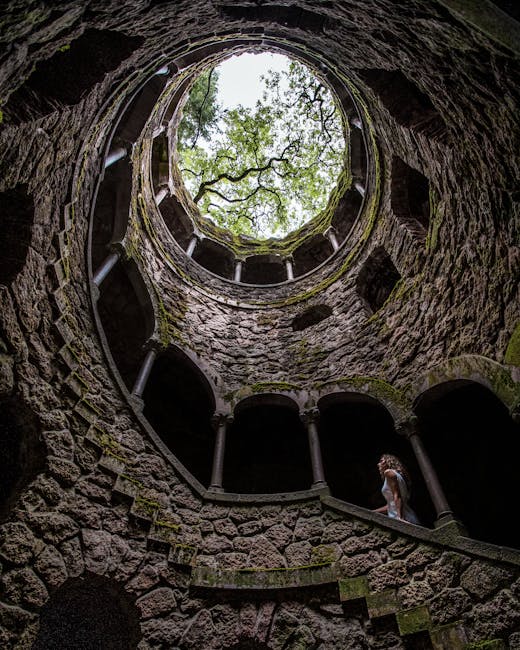
The visit often starts with the palace facade, but the heart of the estate is the labyrinthine garden: artificial caves, lakes, tunnels and above all the famous Initiation Well—a multi-storey spiral chamber with coiling staircases descending to a dry shaft used as a theatrical space for symbolic rites. The well connects to other underground galleries that cross the estate and lead to the chapel or a fountain. The visual experience is powerful: contrasts of light and shadow, unexpected angles, dense vegetation and sculptures that invite contemplation.
Practical tips:
- Visit length: Allow 1h30 to 2h to explore the palace and grounds at a relaxed pace. Symbolism enthusiasts can easily spend much longer.
- Photography: Light conditions in wells and caves often require a good camera or higher ISO settings; respect areas where tripods are prohibited.
- Safety: Some staircases are narrow and damp; non-slip shoes are recommended and exercise care with children or visitors with limited mobility (access to certain underground areas is restricted).
- Interpretation: Use the audio guide or hire a local guide to decode the symbolic references: alchemy, Rosicrucianism, Freemasonry and woven Christian and pagan mythologies.
Secret and interpretation: The Initiation Well is often read as a symbol of death and spiritual rebirth—descending into the well represents a plunge into the unconscious and ascending back out denotes the emergence into a new consciousness. Carvalho Monteiro, nicknamed “Monteiro dos Milhões,” was an eccentric patron who wanted a garden that functioned as a symbolic map of esoteric knowledge. The inscriptions, gargoyles and niches scattered across the grounds are clues to this intent. A less obvious secret: some caves don’t appear on official maps and were used for private strolls and exercises, offering secluded viewpoints meant for meditation or initiatory seeking.
3. Castelo dos Mouros: Ramparts, Medieval History and Wild Panoramas
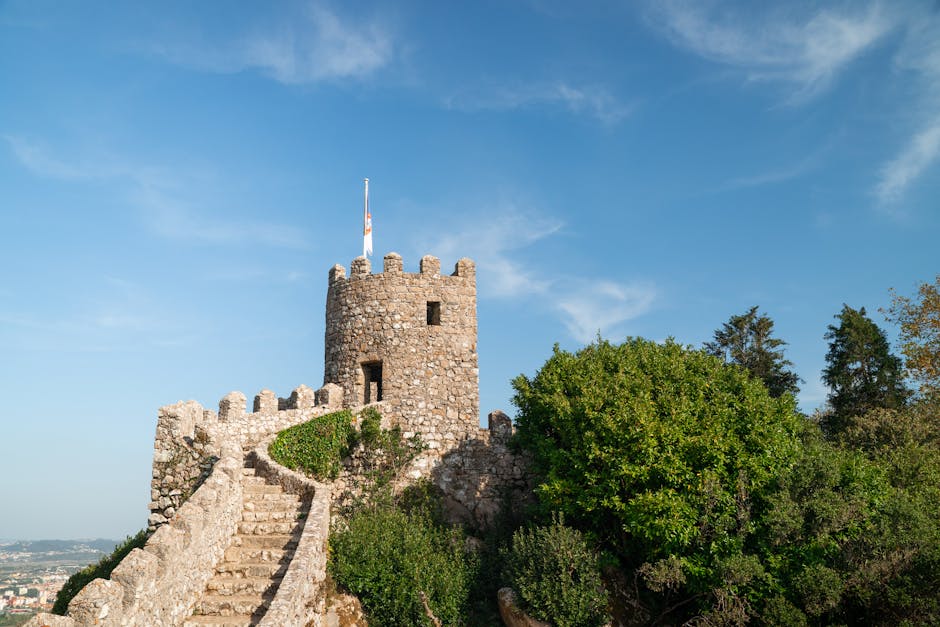
Sitting on a rocky ridge above Sintra are the remains of the Castelo dos Mouros (Moorish Castle), a medieval fortress likely built between the 8th and 9th centuries during the Moorish occupation of the Iberian Peninsula. A strategic site, it controlled routes between the coast and inland. After the Reconquista it was gradually abandoned, then restored in the 19th century as part of the Romantic fascination with ruins.
Address: Castelo dos Mouros, Estrada da Pena, 2710-609 Sintra, Portugal (main entrance near Pena Park).
Opening hours: Usually open from 09:30 to 19:00 depending on the season; times are subject to change (check the official site or ticket office on site).
Price: Adult entry around €8–€10; reduced rates for youth/seniors; very young children may be free under certain conditions. Combined tickets with Palácio da Pena and other monuments are available.
The strength of Castelo dos Mouros lies in its dramatic setting: long walls snaking along the ridge, watchtowers, paved paths between ancient stones and forest mists. From the ramparts you get sweeping views over Sintra’s roofs, Pena Park and, on clear days, the Atlantic Ocean in the distance. Archaeological remains on site let you imagine medieval military life and understand the castle’s defensive role.
Practical tips:
- Getting there: From Sintra centre, tourist buses (line 434) or taxis are options. Walking up is possible but steep. Combine it with a Pena Palace visit—both sites are close to each other.
- Duration: Plan 1 to 1h30 for a full walk of the ramparts and viewpoints. Photographers and hikers may want to stay longer to explore adjacent trails.
- Safety: Some parts of the walls are exposed with no railings and can be windy; take care, especially with children. Wear sturdy walking shoes.
- Historical interpretation: Although the castle was restored during the Romantic era, recent excavations have revealed older occupation layers and structures that testify to continuous use and medieval military adaptations.
Secret and particularities: One of Castelo dos Mouros’ secrets is its historical continuity—the site served sequentially as a military post and then as a romanticised landscape repurposed by 19th-century European elites. Small niches and hidden stairways along the ramparts offer private views over Sintra and sometimes the feeling of a nearly deserted place, away from tourist flows. At the end of the day, when the light drops and mist rises, the atmosphere returns to something medieval—dramatic and lonely.
Conclusion: Planning Your Visit and Keeping a Sense of Wonder
Sintra delivers a unique experience where history, historic fantasy and symbolism blend to create cultural landscapes with strong emotional resonance. The three essentials—Palácio Nacional da Pena, Quinta da Regaleira and Castelo dos Mouros—form a triangle of complementary experiences: Pena for architectural Romanticism, Regaleira for initiatory mystery, and Castelo dos Mouros for medieval history and raw nature. Together they give a rounded reading of Sintra—both an open-air museum and an emotional landscape.
A few practical recommendations to get the most from your stay:
- Planning: Buy tickets online where possible, especially in high season. Combined tickets can save time and sometimes money.
- Timing: Dedicate at least half a day to each of the three sites if you want to enjoy them calmly; ideally two days for a relaxed visit. Start early for Pena and Castelo dos Mouros; visit Regaleira mid-day or late afternoon for a more mysterious ambiance.
- Transport: The local bus (434) links the main sites; otherwise taxis and transfer services are plentiful. Driving gives flexibility but parking is limited near Pena and the castle.
- Local experience: Take time to stroll Sintra’s historic centre (Praça da República), sample local pastries like the queijada and the travesseiro de Sintra at historic cafés (for example Casa Piriquita, Rua Padarias 1/3, 2710-616 Sintra).
- Respect the sites: These places are fragile. Respect closed areas, take your rubbish with you and be careful on heights.
Finally, remember that part of Sintra’s magic can’t be bought with a ticket or pinned to a schedule: it’s the quiet moments in a garden, the rising of mist that reveals an old wall, or the sensation of being carried away down an underground passage at Quinta da Regaleira. Leave room for the unexpected: follow a path, push a door, look beyond the panoramic views and hunt for carved details on a balustrade. These three must-sees will give you images, stories and questions—and that’s precisely what makes Sintra unforgettable.