





Introduction — Why focus your route on Pena, Regaleira and the Moorish Castle in Sintra
Sintra, a UNESCO World Heritage site, is one of the most popular day trips from Lisbon — and for good reason: misty landscapes, wooded hills, colorful palaces and an almost fairytale atmosphere that mixes 19th-century romanticism with medieval remains. Among Sintra’s many landmarks, three places keep coming up on postcards and in guidebooks: the Palácio Nacional da Pena (Pena Palace), Quinta da Regaleira, and the Castelo dos Mouros (Moorish Castle). These three sites make a complementary trio — one for extravagant romance, one for mysticism and labyrinthine gardens, and one for panoramic views and medieval history. This guide gives you a recommended route, exact addresses, prices in euros, typical opening hours, immersive descriptions and practical local tips to get the most out of a half-day, a full day, or a two-day escape in Sintra.
The goal here isn’t just to list times and fares, but to build a coherent experience: which order to follow depending on weather and crowds, how long to spend at each spot, where to buy tickets, where to eat, and how to get between sites. You’ll also find photography recommendations, tips to avoid peak times, and practical pointers (footwear, rain or sun protection, accessibility). This guide takes current realities into account: heavy visitation (especially in high season), the need to book some tickets online, and Sintra’s microclimate (fog that can roll in within minutes).
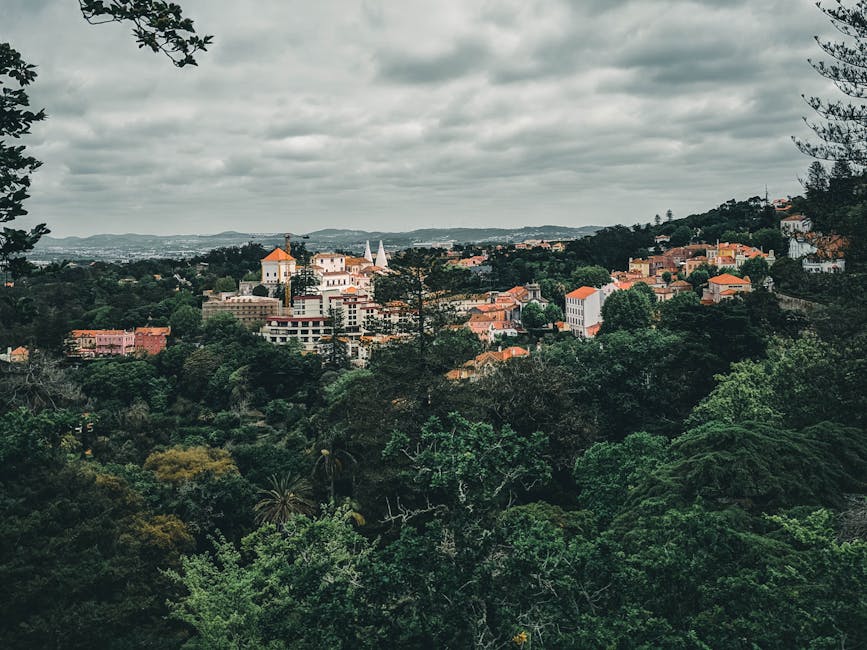
Before diving into the details of each visit, note that Sintra is earned: the hills are often steep, streets can be narrow and cobbled, and the changeable weather can turn a bright morning into an afternoon of fog. That said, those same quirks are a big part of the place’s charm: the colors of the Palácio da Pena become almost otherworldly in golden light or mist, while the tunnels and esoteric initiations of Quinta da Regaleira come alive with dramatic shadows. Follow this guide to plan an optimized, realistic and rewarding itinerary, with all the practical info at your fingertips.
1) Practical information, transport and how to organize your route
Before deciding the order of visits, it helps to understand the basic logistics: how to get to Sintra from Lisbon, how to get around once you’re there, and ticketing options. Sintra sits about 25–35 km northwest of Lisbon depending on where you start. The most common way is the train from Rossio station (Lisbon): the Rossio–Sintra line runs frequently (roughly every 20–30 minutes) and the journey takes about 40–45 minutes. A one-way ticket costs around €2.40 (fare subject to change) and can be bought at ticket offices or machines. From Sintra station, the old town and several shuttle departure points are within walking distance or reachable by bus.
Getting around: to link the station/town center with the attractions, you have several options:
- Public bus 434 (tourist circuit): shuttles between Sintra station, the historic center, Palácio Nacional da Pena and the Castelo dos Mouros. It’s the most economical and convenient choice if you want to avoid uphill walking. Schedules vary, typically 09:00–18:30 in high season. Approximate fare €3–5 one way (or a day ticket depending on the operator).
- Tourist shuttles (Pena buses): run by private companies, sometimes included with combined tickets. Handy but pricier (€6–10 per ride).
- Taxi / Uber: useful if you’re short on time or have mobility issues. Expect to pay around €10–15 from the station to Pena depending on traffic.
- On foot: you can walk, but expect steep climbs. From Sintra station to the historic center is about 15–25 minutes, then allow 45–60 minutes to climb to Pena from the center.
Ticketing and reservations: to save time and avoid long lines, buy tickets online for Palácio Nacional da Pena and Quinta da Regaleira. Castelo dos Mouros tends to have shorter queues, but online booking is still recommended in high season. Here are the usual prices (indicative based on recent official info — check before your visit):
- Palácio Nacional da Pena (Palace + Park) — Address: Estrada da Pena, 2710-609 Sintra, Portugal. Price: €14.00 adult (combined Palace + Park ticket). Hours: 09:30–19:00 (last entry 18:00) in high season; times vary in low season.
- Parque e Palácio de Pena (Park only) — Park entry: €7.50 adult. Hours: 09:30–19:30 (variable).
- Quinta da Regaleira — Address: Rua Barbosa do Bocage 5, 2710-567 Sintra, Portugal. Price: €10.00 adult. Hours: 10:00–18:30 (last entry 18:00).
- Castelo dos Mouros — Address: Estrada do Castelo, 2710-616 Sintra, Portugal (access from Rua Marechal Saldanha/center). Price: €8.00 adult. Hours: 09:30–20:00 in high season (variable).
Booking tips: buy official tickets on the monuments’ websites or trusted platforms (e.g. parquesdesintra.pt for Pena and Castelo dos Mouros; quintadaregaleira.pt for Regaleira). Printed or digital tickets are accepted; have them ready on your phone. In high season (April–October), aim to arrive early (or at opening) for Pena and Regaleira to avoid crowds and get the best light for photos. If you can’t book ahead, expect long lines at Pena’s ticket booths.
2) Detailed visit to Palácio Nacional da Pena (Pena Palace) — colors, terraces and views
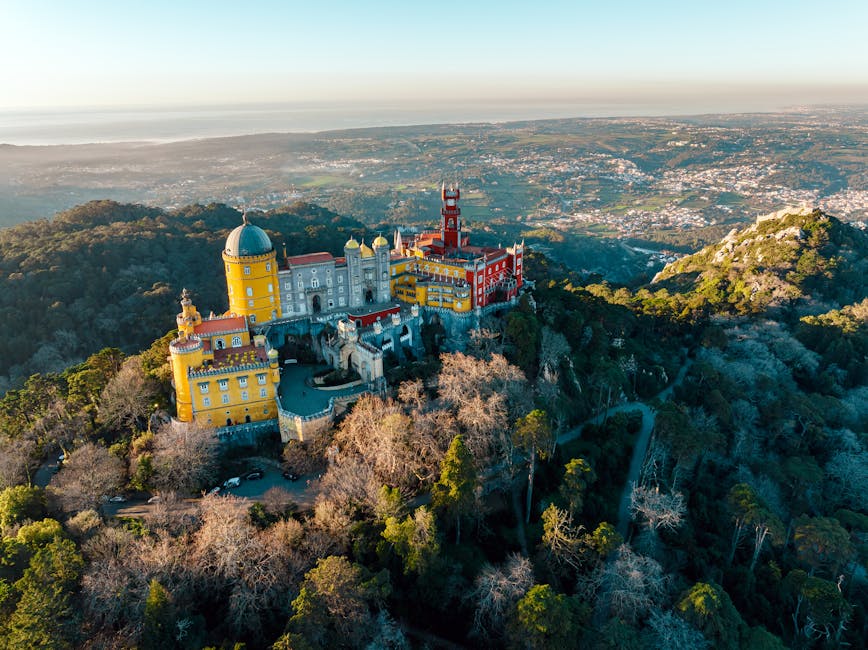
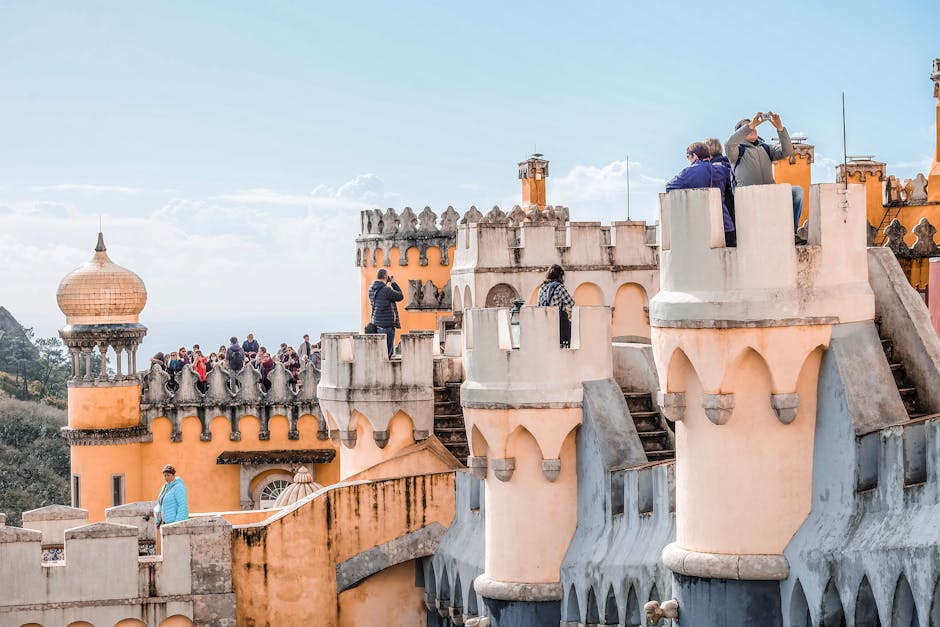
Palácio Nacional da Pena is often the first thing people picture when they think of Sintra: a 19th-century romantic castle perched atop the Serra de Sintra, recognizable for its colorful domes, exuberant turrets and walls painted canary yellow and brick red. Exact address: Estrada da Pena, 2710-609 Sintra, Portugal. The site combines a richly decorated palace and an extensive forested park with winding trails, dramatic viewpoints and small kiosks. Plan for at least 2–3 hours for the full experience (about 1 hour inside the palace, 1–2 hours for the park and viewpoints).
Hours and price: combined Palace + Park ticket €14.00 for an adult (standard price; check parquesdesintra.pt for confirmation). Typical opening: 09:30; closing times vary by season, often 18:30 or 19:00 (last entry 18:00). The park sometimes opens earlier — check ahead. Audio guides are available in several languages (usually an extra €3–5); getting one is recommended to understand Portuguese romanticism and King Ferdinand II’s restoration of the palace.
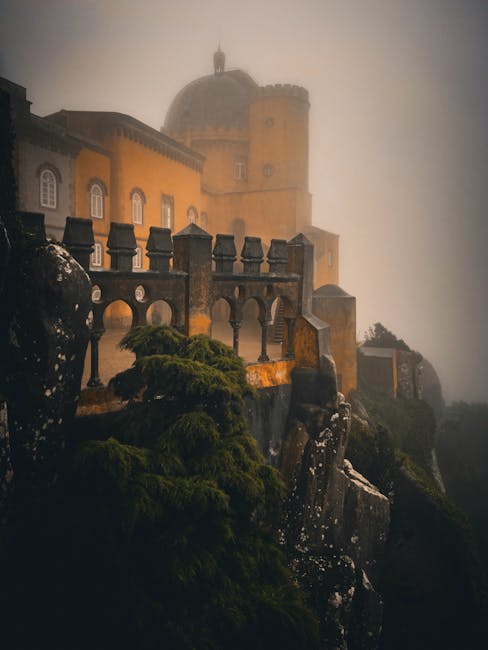
Immersive description: approaching the palace is almost theatrical: a burst of color set against woodland. The terraces offer vistas toward the Atlantic coast and the town of Sintra; on a clear day you can see the ocean. Inside, rooms decorated with azulejos, woodwork and period furniture tell the story of the 19th-century modernization, with neo-Gothic, Manueline and Moorish influences. The Palace was designed like a romantic fairytale — every turret and battlement is meant to be seen and photographed.
Practical tips:
- Try the route that goes against most visitors: start in the park (when it’s cooler) and gradually make your way up to the palace as the light improves.
- Wear proper shoes: the park has uneven paths and stone steps — sturdy walking shoes are essential.
- Photography: morning light often flatters the colorful facades; sunset can be spectacular but access to Pena gets trickier later in the day (reduced shuttles).
- If you’re driving, official parking is limited — follow signs and have cash or card ready for parking meters.
3) Quinta da Regaleira — initiation gardens, the Initiation Well and symbolism
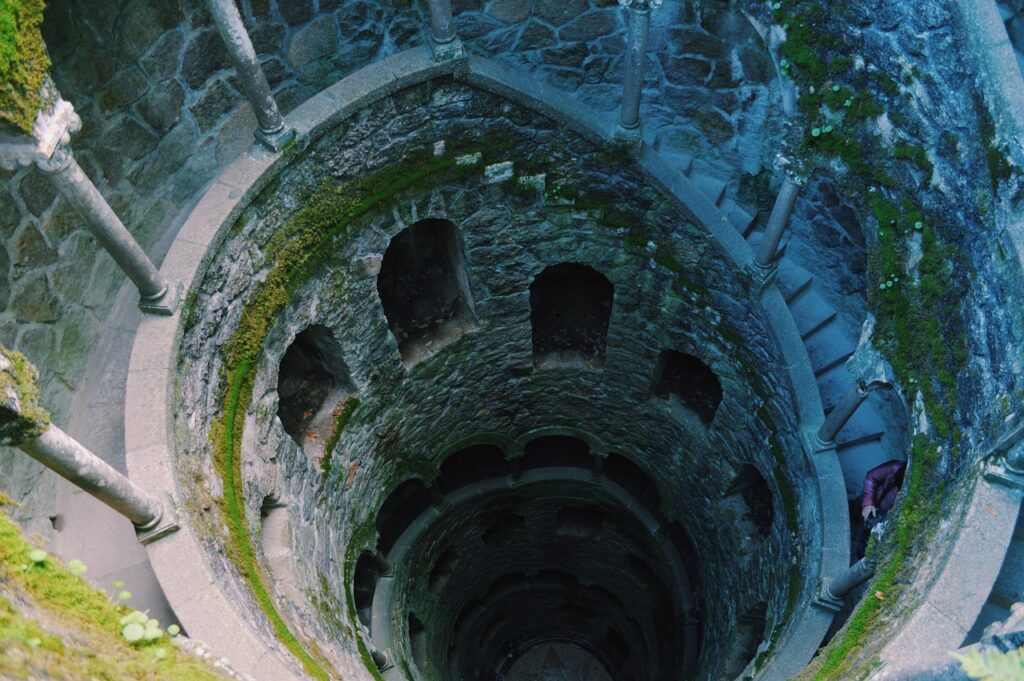
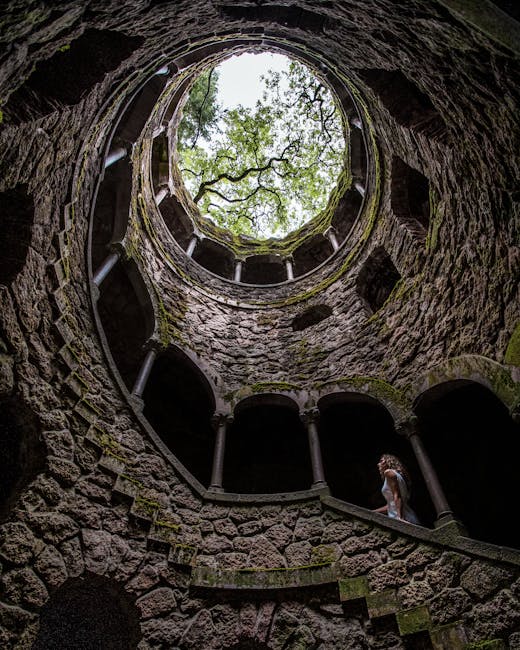
Address: Quinta da Regaleira, Rua Barbosa do Bocage 5, 2710-567 Sintra, Portugal. Quinta da Regaleira is a romantic, esoteric estate made up of a palace, a chapel, lush gardens, man-made grottoes and, most famously, the « Initiation Well. » Visiting Quinta is an immersion in Masonic, Hermetic and alchemical symbolism — a place where architecture, landscape and myth converge.
Hours and price: typical hours 10:00–18:30 (last entry 18:00). Price: €10.00 adult (general admission, usually available at the ticket office or online via quintadaregaleira.pt). Allow 1.5–2.5 hours to explore the palace and gardens at a relaxed pace; photography and history fans may want to linger longer.
Immersive description: start with the eclectic palace façade, then lose yourself on the park paths. The spiral staircases of the Initiation Well descend through several levels, with galleries and passages opening onto caverns and small lakes. The well wasn’t built for drawing water but as an initiatory symbol — it’s 27 meters deep with nine landings, evoking a symbolic descent toward knowledge or death/rebirth depending on interpretation. The artificial grottos, often damp and lichen-covered, heighten the mysterious atmosphere.
Tips and recommendations:
- Visit Quinta in the morning or late afternoon for dramatic light and fewer visitors inside the towers and well.
- Take your time: Quinta reveals itself by walking slowly, studying the details of sculptures, inscriptions and symbols. Bring a compact torch if you want to explore darker caverns — though access and safety are generally well arranged.
- Kids: the estate is fascinating for young visitors but watch out for narrow staircases and unguarded ledges at some viewpoints.
- Shop and café: Quinta has a small souvenir shop and sometimes a refreshment area; for a full meal head back to central Sintra where cafés and restaurants serve local specialties (travesseiros — Sintra pastries are highly recommended).
4) Castelo dos Mouros (Moorish Castle) — medieval ramparts and historic panoramas
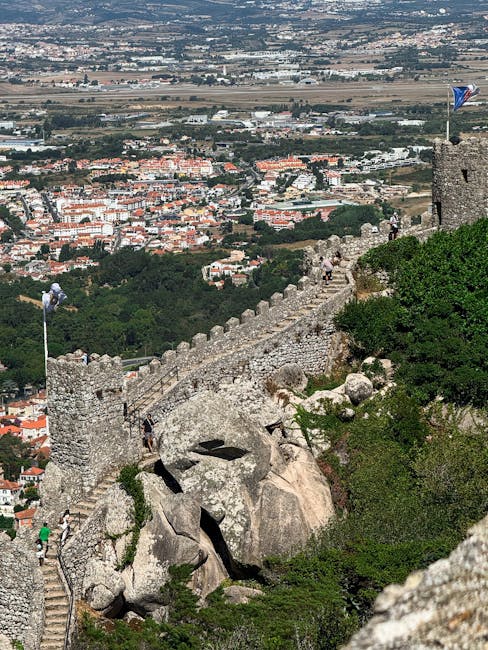
Address: Castelo dos Mouros, Estrada do Castelo, 2710-616 Sintra, Portugal. Perched on a rocky ridge, Castelo dos Mouros is a fortified remnant from the medieval period, originally built by the Moors in the 8th–9th centuries and later remodeled over time. Compared with Pena’s colorful romanticism and Regaleira’s mysticism, Castelo dos Mouros offers a rawer historical feel: stone walls, watchtowers and ramparts overlooking the valley.
Hours and price: typical hours 09:30–20:00 in summer, earlier closing in winter (times vary by season). Price: €8.00 adult (tickets sold via parquesdesintra.pt or at the ticket office). Recommended visit length is 1–1.5 hours to walk the ramparts and enjoy the views; if you like slow photography and contemplation, allow 2 hours.
Immersive description: the approach is a sloping path that winds through vegetation. Once on the ramparts, views stretch to the Atlantic coast, the town of Sintra and, lower down, the Palácio da Pena — often visible a few hundred meters away as the crow flies. Visit highlights include climbing to the towers, walking the battlements and exploring remains of cisterns and bastions. The site tells the strategic history of the region: commanding position, defensive lines and maritime observation.
Practical tips:
- Combine Castelo dos Mouros with Pena: each is often visible from the other. The order depends on your energy and the weather — early visits to the castle often yield clearer views before fog rolls in.
- Safety: some sections of wall and stairs are narrow — watch children and those with reduced mobility (access can be challenging; plan assistance if needed).
- Panoramic photography: the best spot is the southwest section of the walls to capture Pena and the coast together. A wide-angle lens helps convey the site’s scale.
- Combined tickets: there are « Palácio da Pena + Castelo dos Mouros » combined options at a reduced rate depending on timing; check the packs on parquesdesintra.pt to save if you plan both the same day.
Step-by-step recommended itinerary and variations depending on time available
Here are several scenarios depending on how much time you have and how fast you like to move: a focused half-day, a full day, or a two-day stay. Each suggestion includes the recommended visit order, approximate durations and tips for meal breaks.
Option 1 — Half-day (ideal if you’re leaving early from Lisbon):
- Arrive in Sintra around 08:45–09:00. Head to Castelo dos Mouros (or buy the ticket online if possible). Visit 09:30–11:00 (1h30).
- From the castle, descend or take the shuttle to Palácio Nacional da Pena: exterior and terraces 11:15–12:30 (1h15). If you’re pressed for time, skip the palace interior and focus on the panorama.
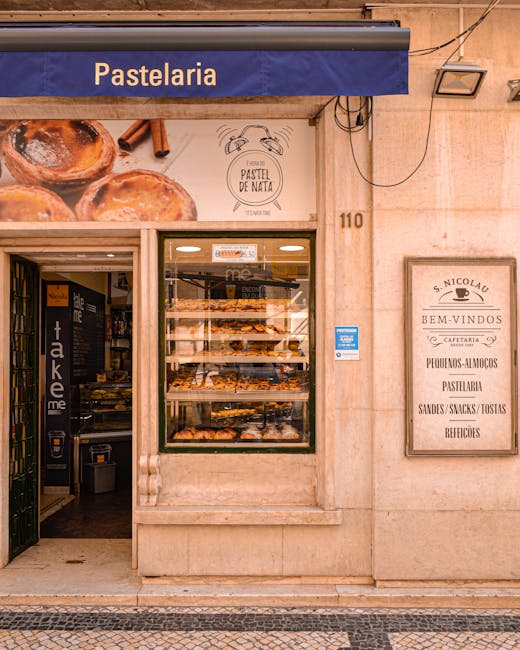
- Return to town for a quick lunch (sandwiches or a pastelaria). Total time: 4–5 hours including transport.
Option 2 — Full day (recommended for the richest experience):
- 09:00 — Start at Palácio Nacional da Pena (Palace + Park): 09:30–12:30 (3 hours) to enjoy the interiors and trails.
- 12:30 — Head down to town for lunch (restaurants and cafés; try the « travesseiros de Sintra » at the pastry shop « Piriquita »: Rua das Padarias 1/2, 2710-616 Sintra).
- 14:00 — Afternoon at Quinta da Regaleira: 14:00–16:30 (2h30), explore the well and gardens.
- 16:45 — Leisurely stroll in the old town, souvenir shopping, or a quick visit to Palácio Nacional de Sintra (in the historic center) if time allows.
Option 3 — Two days (perfect for relaxed explorers):
- Day 1: Palácio Nacional da Pena + Castelo dos Mouros — morning for Pena (3h), afternoon for the Castle (1–2h) and sunset at a viewpoint.
- Day 2: Quinta da Regaleira + historic center and museums, local markets, hiking in Sintra-Cascais Natural Park, visiting additional palaces if desired (Palácio de Monserrate, Palácio Nacional de Sintra).
Meal breaks and dining tips: the historic center is full of cafés and restaurants. Local recommendations:
- Piriquita — Address: Rua das Padarias 1/2, 2710-616 Sintra. Famous for « travesseiros » (classic Sintra pastry). Price range: €1.50–3.50 per pastry.
- Tascantiga — Rua Nova do Carvalho 12 (center), for Portuguese tapas; dishes €8–15.
- Restaurante Azenhas do Mar (if heading to the coast) — expect higher prices for seafood.
Local tips, safety and practical notes
A few tips gathered from locals and frequent visitors to noticeably improve your trip:
- Arrive early: attractions like Pena and Regaleira draw full buses of tourists after 10:30. Opening time is often the best moment to avoid the crowds.
- Payments and tickets: prioritize online booking for Pena and Regaleira. Bring an international card and some cash for cafés and small street purchases.
- Clothing: Sintra’s weather changes fast. Pack a windproof jacket, a lightweight rain shell and layers. Even in summer, cool mornings and fog are common.
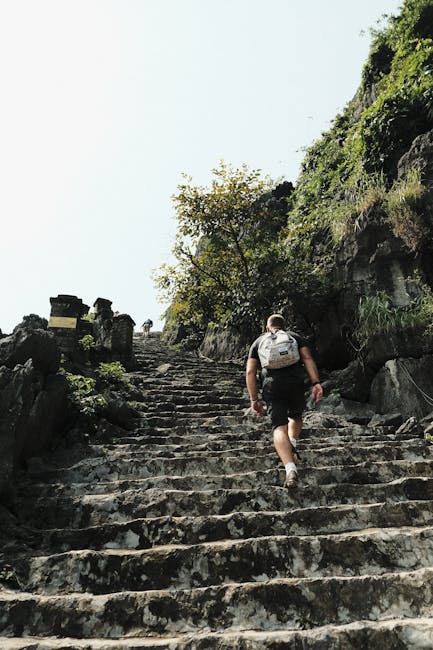
- Shoes: essential — uneven paths, stairs and slippery rocks in the park. Avoid high heels.
- Accessibility: the sites are partially accessible. Pena has accessible areas but many stairs; Quinta da Regaleira and Castelo dos Mouros include steps and steep paths. Contact the sites if you need assistance.
- Respect the heritage: do not climb on unauthorized ramparts, do not leave litter and follow signage (especially around sensitive park areas).
- Responsible photography: drones are prohibited without authorization. Use a wide-angle lens for panoramas and a standard lens for architectural details and sculptures.
Health and comfort: during busy periods or health restrictions, masks may be recommended inside buildings and social distancing measures could be in place. Bring a small first-aid kit, water and snacks — lines and walks can be tiring. If you’re a photographer or history buff, allow extra time; these sites reveal themselves in small discoveries, and every corner can hold a surprising detail.
Conclusion — How to craft an unforgettable day in Sintra
Sintra offers a rare mix of architectural romance, symbolic mystery and medieval remains, making each visit unique depending on the hour, weather and chosen route. By lining up Palácio Nacional da Pena, Quinta da Regaleira and Castelo dos Mouros into a coherent plan — and booking your tickets in advance — you maximize your time and discover the region’s complementary faces: Pena’s visual exuberance, Regaleira’s mystery and the Moorish castle’s historical strength. The exact addresses and prices provided here (Pena — Estrada da Pena, 2710-609 Sintra, €14.00 for Palace + Park; Quinta da Regaleira — Rua Barbosa do Bocage 5, 2710-567 Sintra, €10.00; Castelo dos Mouros — Estrada do Castelo, 2710-616 Sintra, €8.00) let you prepare and book before you go. Note that prices and hours can change: always check the official sites (parquesdesintra.pt and quintadaregaleira.pt) for updates and combined offers.
For an ideal day, start early, wear good shoes, bring a jacket and keep your camera ready. Take time to wander through the gardens and study the architectural details — those moments of contemplation turn a visit into a lasting memory. If you have two days, you’ll have the luxury of exploring more Sintra treasures like Palácio de Monserrate or the natural park trails. And above all, behave responsibly: Sintra is fragile and heavily visited; your thoughtful actions help preserve this exceptional heritage for future generations.
Safe travels and happy exploring — may your photos do justice to Pena’s palette, Quinta da Regaleira’s poetic darkness and the timeless panoramas of Castelo dos Mouros.