





Introduction — Why the debate over driving to Sintra deserves a closer look
In just a few decades Sintra has become one of Portugal’s most mythologized spots. Its colorful palaces, exotic gardens and suspended viewpoints draw millions of visitors each year. With that tidal wave of tourism came a quick, reductive moral line: if you drive to Sintra, you’re “selfish,” to blame for traffic, pollution and a “bad” tourist experience. That snap judgment deserves nuance. It’s often based on media images and catchy slogans rather than a full take on local realities.
Opposing cars at heritage sites can feel noble — encouraging low-impact transport, protecting the climate, reducing nuisances. Those are valid aims. But the reality on the ground is more complicated: Sintra isn’t just a point A to a single Instagram monument. It’s hilly terrain dotted with narrow streets, scattered villages, forests and artisan workshops far from bus lines. Banning or demonizing cars across the board can have perverse effects: marginalizing visitors with reduced mobility, penalizing small family-run accommodations away from the center, or making lesser-known but economically fragile treasures inaccessible.
This article takes a contrarian stance: it explains why driving to Sintra isn’t necessarily selfish, and above all how to do it responsibly and in a way that helps you understand the place. I challenge received ideas, identify the real problems (logistics, conservation, overtourism), then offer concrete alternatives — routes, recommended parking, sensible practices, and one lesser-known site to favor. The aim isn’t to justify limitless behavior, but to open the debate and provide practical solutions to reduce impact while enabling a rich, respectful experience spread across the territory.
You’ll find specific advice here (exact names, addresses, indicative prices, usual opening times) to plan a smart car trip to Sintra: when to come, where to park, how to combine driving with soft mobility, which roads to favor to avoid congestion, and above all which concrete alternative to visit if you want to escape the crowds downtown. Practical data are indicative and should be checked before you travel, but they were chosen to be immediately usable.
1) What we mean by “driving in Sintra” and why the criticism is oversimplified
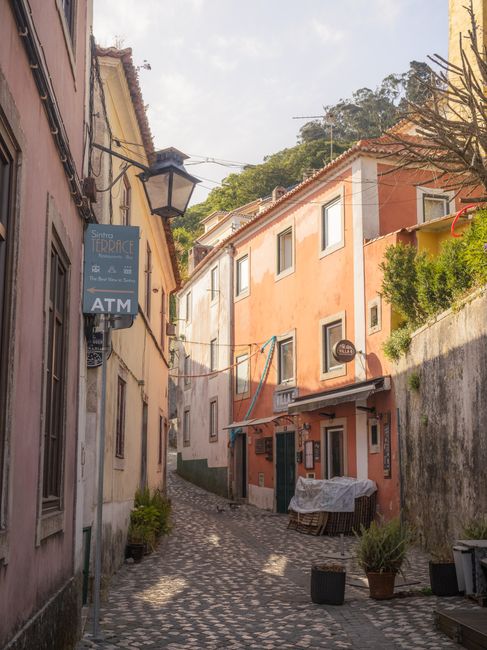
When visitors are accused of driving to Sintra “out of selfishness,” many different situations get lumped together under a single critique. There are people who arrive early from Lisbon for a quick Pena Palace round-trip — palace, quick photo, lunch, and back; there are families with young kids or people with reduced mobility for whom a car is the only practical option; there are slow travelers seeking lesser-visited corners, and local artisans or suppliers who need a vehicle to work. Putting all these profiles under the label “selfish” erases important distinctions.
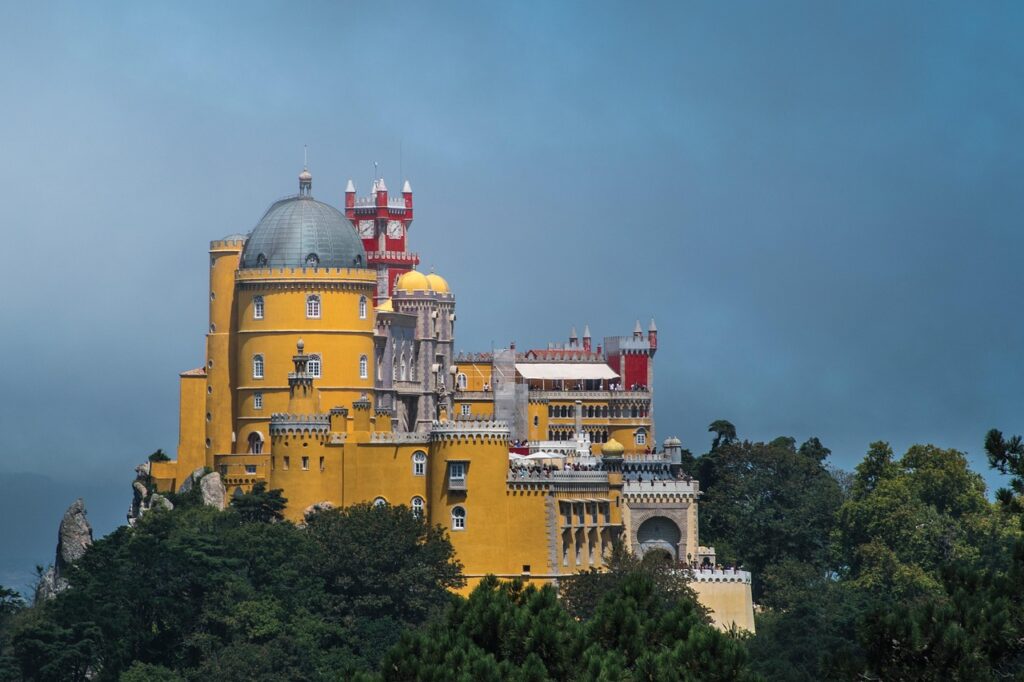
Complaints about cars often focus on a few visible symptoms: traffic jams around the Palácio da Pena (Estrada da Pena, 2710-609 Sintra), lines of cars parked along road edges, and occasional pollution. These phenomena are real, but they’re amplified by specific factors — tourist peak hours (10:00–15:00), poor regulation of arrivals, badly distributed coach circuits — and not by the mere existence of private vehicles. Smart policy should therefore manage flows, strengthen organized parking options, and promote combined mobility (car + walking/mini-bus) rather than moralizing without offering solutions.
Moreover, the car can be a way into “deep Sintra”: small palaces and gardens with fewer visitors, forest trails, rural restaurants that aren’t directly served by buses. In a territory where topography makes long walks difficult, a car used with common sense (arrive early, respect signage, park in authorized spots) allows visitors to spread out beyond the same overcrowded viewpoints, which can actually relieve pressure on the historic center.
2) Where and how to park without ruining the experience — concrete options and best practices
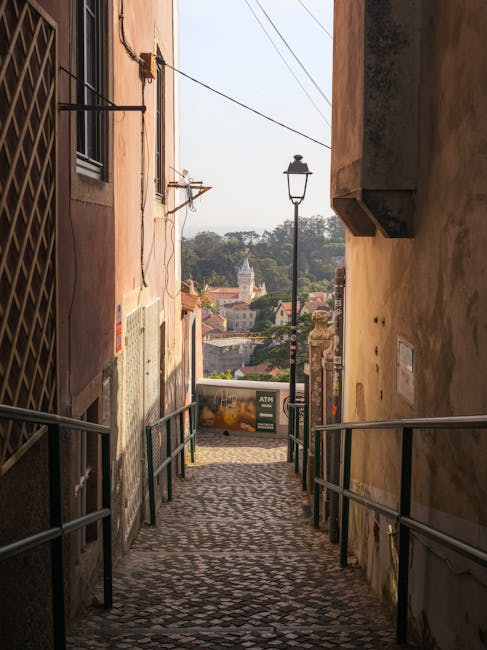
Smart parking is the key to making the car practical and low-impact. Here are concrete spots and tips to park in Sintra while minimizing your footprint:
- Parking at Sintra Train Station (Estação Ferroviária de Sintra) — Address: Rua José Fernandes, 2710-589 Sintra. Indicative price: meter zones may be free/blue zone depending on season; public parking near the station is often free on the outskirts or paid for the day (€2–5 depending on duration). Hours: accessible 24/7, ticket counters and trains run early (trains to Lisbon from ~6:00). Advantage: lets you leave the car and use the local train (Linha de Sintra) or minibuses to reach the center.
- Historic Center Car Park (near Largo da República) — Address: Largo da República (Town Center). Indicative price: €1.50–2.50/hour, day rates sometimes available (€8–12). Hours: parking open 24/7, paid bays regulated. Advantage: direct access to the historic core without clogging the narrow streets.
- Palácio de Monserrate Parking — Address: Palácio de Monserrate, Casal do Reguengo, 2710-405 Sintra. Price: often free for park visitors (check at the entrance), otherwise €2–5. Palace opening hours: generally 10:00–18:00 (seasonal variations). Advantage: ideal if you combine Monserrate with other car visits, since the site is more spread out and less saturated than Pena.
Best practices to follow:
- Arrive early (before 9:30) or late afternoon (after 16:00) to avoid peak times. The 10:00–15:00 window concentrates most visitor flows.
- Use official parking lots rather than stopping on verge or shoulders — this avoids fines and protects vegetation.
- Combine car and public transport: park at Sintra station and take bus 434 or the train to reach Quinta da Regaleira, the center and other sites.
- Favor electric vehicles if possible — Sintra has Mobi.E charging points (search “Mobi.E charging Sintra Largo da República”). Charging may be paid; expect around €0.30–0.50/kWh depending on operator.
3) A solid alternative: explore Quinta da Regaleira and its surroundings at your own pace (away from the Pena crowds)
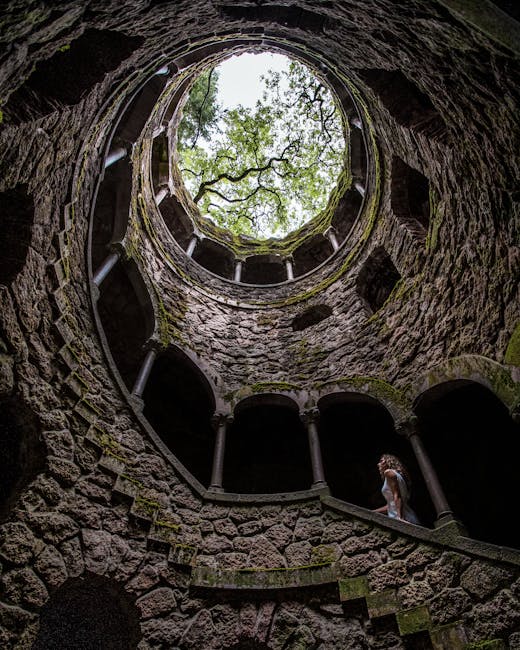
If you’re looking for an alternative to the crush at the Palácio da Pena, Quinta da Regaleira is a rich, subtle choice — and a car makes it easier to explore the wider neighborhood. Quinta da Regaleira (full name: Quinta da Regaleira — Palácio, Capela e Poço Iniciático) is located at Rua Barbosa du Bocage 5, 2710-567 Sintra. Indicative prices: adult entry ~€10–12; usual hours: April–September 09:30–20:00, October–March 09:30–18:00 (check before you go). Exact address and opening times can change for private events, so confirm on the official site or at the ticket office.
Why this alternative matters:
- The Quinta offers a more intimate, mystical experience: gardens, lakes, artificial caves and the famous Initiation Well — a spiral shaft carved into stone where visiting feels like a dreamlike exploration rather than a simple photo stop.
- A car lets you easily link to nearby spots poorly served by buses: for example the Chalet and Garden of the Countess of Edla (Mata de São Pedro) or rural restaurants on Rua Consiglieri Pedroso.
- Parking: there are spaces around the historic center and on the Quinta’s street (sometimes paid). A practical option is to park at the Parque de Estacionamento do Centro Histórico (Largo da República) then walk 5–10 minutes to the Quinta. That way you limit traffic inside the historic heart and protect the narrow lanes.
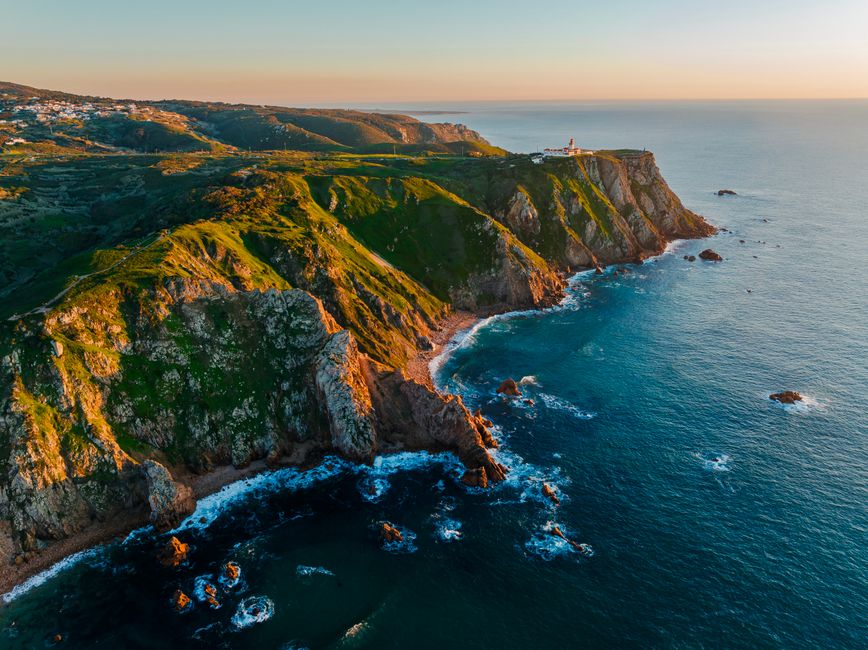
Practical tip: pair a visit to Quinta da Regaleira with lunch at Tascantiga (Tascantiga — Address: Rua Consiglieri Pedroso 23, 2710-616 Sintra). Tascantiga is a local tavern known for petiscos (Portuguese tapas). Average price: €10–20 per person depending on dishes. Usual hours: 12:00–22:00 (closed some afternoons in low season). Afterward, take the scenic route toward Cabo da Roca if you have time — the car makes this coastal drive very accessible.
4) Reducing your impact by car: responsible strategies and local engagement
Driving to Sintra responsibly means concrete acts that lower collective impact and support the local economy. Here’s a pragmatic toolbox:
- Carpooling and ride-sharing: if you’re coming from Lisbon, organize a carpool with other travelers. That reduces the number of vehicles while keeping the flexibility of a car. Local platforms or Facebook groups dedicated to travel in Portugal can help arrange rides.
- Favor dispersed accommodations: staying in rural guesthouses around Sintra (e.g. Casa da Azenha — indicative address: Estrada Nacional 9, Sintra — check availability) helps spread tourism impact away from the center. These places often rely on visitors arriving by car to stay economically viable.
- Support local businesses: stop at village artisans and restaurants (e.g. A Piriquita — Pastelaria A Piriquita, Rua Padarias 1, 2710-603 Sintra — famous for travesseiros; price ~€1.50–2.50 each, open 08:30–20:00). Your local spending partly offsets transport impact.
- Plan your timing: stagger visits (very early morning, midday lunch break, a secondary site in the afternoon) to avoid being part of the main visitor wave. For example, visit Monserrate in the afternoon (Palácio de Monserrate, Casal do Reguengo, 2710-405 Sintra; ticket ~€8–10, usual hours 10:00–18:00) when Pena is busiest.
- Support local mobility initiatives: check electric shuttle services, or rent a hybrid/electric car. Some local agencies in Sintra offer ECO models (e.g. Guerin Rent a Car — local agency, verify exact address and availability). Mobi.E charging points are listed online to plan recharges.
Finally, keep a respectful attitude — don’t park illegally, avoid loud behavior in forests, and stick to trails — these practices help defend reasoned car access against political decisions that might otherwise become purely punitive. The real goal is to reconcile accessibility and preservation: one doesn’t have to exclude the other if visitors act thoughtfully.

Conclusion — Toward a thoughtful, responsible use of the car in Sintra
Demonizing the car in Sintra wholesale is a simplification that harms both the quality of visits and the local people who depend on tourism. A car, used with discernment, planning and responsibility, can be a tool to access a less mainstream Sintra — places like Quinta da Regaleira, Palácio de Monserrate, or nearby coastal roads become reachable without being limited to Pena’s queues. What matters isn’t only the mode of transport but how it’s woven into a smart visit plan: arrive at the right times, use official car parks, opt for lower-emission vehicles, promote carpooling, and support local businesses.
I’m not advocating for chaotic driving or more traffic: I’m arguing for nuance and solutions. If you drive to Sintra, prepare your route, choose indicated parking (Sintra station, central car parks, palace-associated lots), combine walking or train rides with driving, and pick secondary routes and alternative sites to spread impact. Always check times and prices (the info here is indicative): Palácio da Pena — Estrada da Pena, 2710-609 Sintra (tickets vary around €14–16 for palace+park, seasonal hours), Quinta da Regaleira — Rua Barbosa du Bocage 5, 2710-567 Sintra (about €10–12, hours vary), Monserrate — Palácio de Monserrate, Casal do Reguengo, 2710-405 Sintra (entry ~€8–10, usual hours 10:00–18:00). A bit of preparation turns a car trip—often judged “selfish”—into a responsible, respectful and rewarding experience.
In short: drive if it’s the best option for you — but do it as an informed citizen. The Sintra road can lead to lesser-known discoveries, meetings with local artisans, and landscapes not yet erased by mass tourism. The collective challenge is to steer those choices toward more equity and sustainability, not automatic exclusion. Sintra is big and complex enough to welcome diverse ways of getting there — provided each one is thought through.